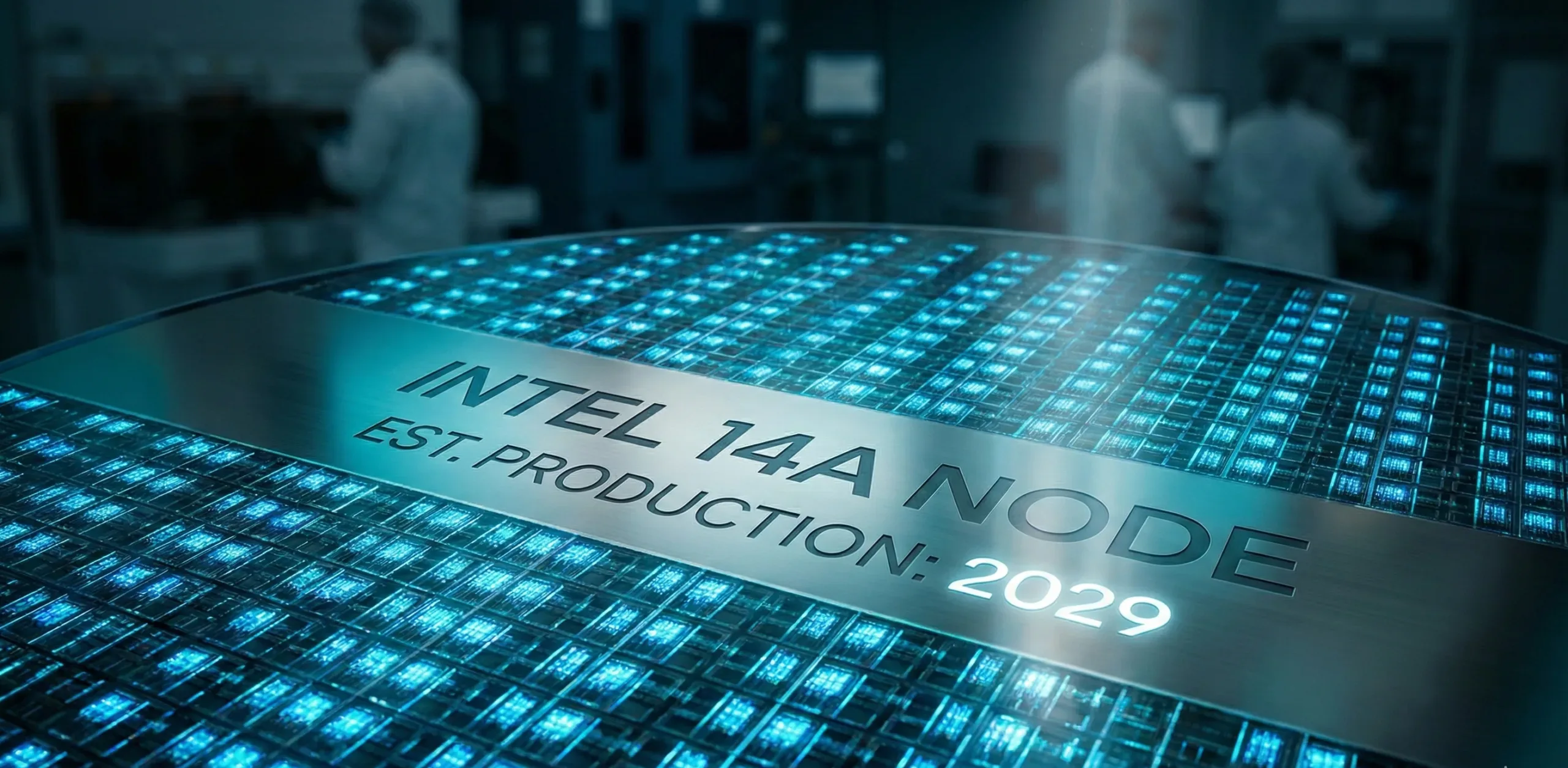

Intel’s 14A process node was supposed to signal the company’s manufacturing comeback. Apple and Nvidia might adopt it for high-volume production by 2028, bringing the kind of marquee customers that would validate Intel’s foundry ambitions. That optimistic timeline just collapsed.
Intel CEO Lip-Bu Tan confirmed at the Cisco AI Summit that the 14A roadmap has slipped by one year. Risk production now targets 2028 instead of 2027. Mass production delays to 2029. For external customers like Apple or Nvidia hoping to diversify away from TSMC, meaningful volume access won’t happen until 2030—or more realistically 2031.
Even we at WireUnwired when discussing internally had known that the 2028 timeline was never feasible from a fab construction perspective. Even if mass production ramps smoothly in 2029, Intel will allocate early output to internal products before opening capacity to external customers.
The math is straightforward: building fabs takes at least three years in the US, often longer. Equipment installation, process qualification, and yield ramp add more time. Optimistic projections that ignored these constraints are now hitting reality.
This delay fits a broader pattern we’re seeing across AI infrastructure—timelines based on projected demand that may not materialize on expected schedules. Companies announce ambitious capacity plans assuming partnerships will convert to binding orders, then recalibrate when demand projections prove inflated. It’s part of what some analysts call the “OpenAI syndrome,” where partnerships remain memorandums of understanding rather than converting to executed contracts.

⚡
WireUnwired • Fast Take
- Intel 14A mass production delayed one year: now targeting 2029 instead of 2028
- External customers (Apple, Nvidia) won’t get meaningful capacity until 2030-2031
- Root causes: fab construction timelines and insufficient funding for rapid expansion
- Reflects broader pattern of optimistic AI infrastructure timelines hitting reality
Why Fab Construction Timelines Matter ?
Market analysis consistently underestimates how long it takes to build leading-edge semiconductor fabs. The typical timeline: three years minimum from groundbreaking to first wafer output, and that’s assuming everything goes perfectly. In the US, regulatory approvals, environmental reviews, and construction labor constraints often extend this further.
Intel’s Arizona facilities—Fab 2 and Fab 3—face these exact constraints. Even if both complete on schedule between late 2026 and 2027, that only marks when buildings are ready. Equipment installation takes another 12-18 months. Process qualification and yield ramp add another year minimum before you’re producing chips at volume with acceptable defect rates.
This means Intel’s internal 2029 mass production target is aggressive but potentially achievable—for Intel’s own products. External customers get lower priority. Apple or Nvidia can’t base product roadmaps on capacity that might or might not be available depending on how Intel’s internal needs evolve. Real external customer access requires dedicated capacity with guaranteed allocation, which pushes realistic timelines to 2030 at the earliest.
The 2031 timeframe appears more realistic for meaningful external volume. By then, Intel will have worked through yield issues, established stable production for internal products, and have confidence in capacity availability for outside customers. Until then, any external customer commitments remain speculative.
The Funding Constraint
Beyond construction timelines, funding emerges as a structural bottleneck. Leading-edge R&D costs are surging—each new process node requires more investment in EUV lithography, advanced packaging, and process development.
Intel’s weak operating performance over the past several years means the company can’t fund rapid capacity expansion from operating cash flow alone.
External capital becomes necessary, but current funding levels remain insufficient for the aggressive buildout required to hit optimistic timelines. The CHIPS Act provides subsidies, but those cover only a fraction of total fab construction costs. Intel must either raise additional capital—difficult given stock performance and investor skepticism—or slow capacity expansion to match available funding.
This creates a catch-22. To attract major external customers like Apple and Nvidia, Intel needs to demonstrate committed capacity with clear timelines. But building that capacity requires funding that’s easier to secure if major customers have already committed. Without binding customer commitments, investors hesitate to fund speculative capacity. Without committed capacity, customers hesitate to sign binding agreements.
Customer Perspective: Why Apple and Nvidia Hesitate
For Apple and Nvidia, Intel’s 14A delay reinforces existing concerns about relying on Intel as a foundry partner. Both companies currently depend heavily on TSMC, which creates geopolitical concentration risk—a single Taiwan earthquake or China conflict could halt their entire chip supply. Diversifying to Intel makes strategic sense in theory.
But diversification only works if the alternative supplier can deliver on schedule with competitive yields and pricing. Intel’s one-year slip on 14A, combined with the company’s historical struggles hitting process node targets, raises questions about execution capability. If Intel can’t reliably deliver advanced nodes on committed timelines, the diversification benefit disappears.
Apple in particular has been burned by supplier delays before and tends to require extremely high confidence in manufacturing capability before committing high-volume products. A 2031 timeline for meaningful 14A capacity means Apple’s products launching in 2031-2032 timeframe—several generations away. By then, TSMC will be ramping 2nm or even more advanced nodes, potentially maintaining its technology lead despite Intel’s progress.

Nvidia faces similar calculus. The company’s AI chip roadmap moves fast, with new architectures every 12-18 months. Committing future generations to Intel 14A requires confidence that Intel will be competitive with TSMC’s offerings in the same timeframe. The one-year slip doesn’t inspire that confidence, particularly when coupled with Intel’s need to prioritize internal products over external customers during initial production ramp.
What This Means for Intel’s Foundry Strategy
Intel’s foundry ambitions depend on attracting major external customers to justify massive capacity investment. Without customers like Apple and Nvidia committing volume, Intel struggles to achieve the utilization rates needed to make leading-edge fabs economically viable. But the 14A delay makes it harder to win those commitments, creating a credibility gap that’s difficult to overcome.
The company’s best path forward: focus on executing 2029 mass production successfully for internal products, demonstrate stable yields and competitive performance, then use that track record to attract external customers for subsequent nodes. Trying to win major external commitments for 14A while timelines slip and funding remains constrained risks over-promising and under-delivering again.
Late 2027 emerges as the critical checkpoint. By then, Arizona Fab 2 and Fab 3 should be complete if Intel’s construction timeline holds. That’s when the industry will know whether Intel can execute on its foundry buildout plans or whether further delays push external customer access even later than current 2030-2031 projections.
For the broader semiconductor industry, Intel’s 14A delay reinforces a sobering reality: building leading-edge fab capacity takes longer and costs more than optimistic projections suggest. Companies announcing ambitious capacity expansion plans should expect similar timeline slips when initial projections ignore physical construction constraints and funding realities. The AI boom may be driving unprecedented demand projections, but translating those projections into actual production capacity remains constrained by fundamental physics and economics of fab construction.
For discussions on semiconductor manufacturing, Intel’s foundry strategy, and fab capacity timelines, join our WhatsApp community where industry professionals analyze chip production developments.
Related: The ‘OpenAI Syndrome’ Hitting Tech Companies—And Why Partnership Timelines Keep Slipping
Discover more from WireUnwired Research
Subscribe to get the latest posts sent to your email.