


⚡
WireUnwired Research • Key Insights
- Breaking News: UNIST researchers have solved the Schottky barrier problem that has stalled 2D semiconductor commercialization for years.
- Impact: The new theoretical framework enables accurate prediction of contact resistance, unlocking pathways for ultra-scaled logic devices below 10 nanometers.
- The Numbers: Published November 4, 2025 in ACS Nano; addresses a critical bottleneck affecting every 2D semiconductor-metal interface.
For nearly a decade, 2D semiconductors have promised to revolutionize computing. Atomically thin materials like molybdenum disulfide (MoS₂) offer exceptional electronic properties and energy efficiency. Yet they’ve remained trapped in the laboratory.
The culprit? Contact resistance.
When engineers tried to connect 2D semiconductors to conventional metal electrodes, something unexpected happened. Electrons faced an invisible barrier—the Schottky barrier—that was far higher than theory predicted. This gap between theory and reality created a fundamental problem:
Engineers couldn’t design reliable devices because they couldn’t accurately predict how well electrons would flow at the interface.
Researchers at UNIST :A Team Takes On the Challenge To Solve 2D semiconductor commercialization
Enter researchers at UNIST (Ulsan National Institute of Science and Technology) in South Korea. Led by Professors Changwook Jeong and Soon-Yong Kwon, the team decided to investigate why experimental results consistently contradicted theoretical models.
What they discovered was elegant: the existing Schottky-Mott rule—a foundational equation used for decades to predict contact barriers—was incomplete. It didn’t account for two critical phenomena happening at 2D semiconductor interfaces.
First, conduction band extension (CBE) in MoS₂ was altering how electrons behaved near the contact. Second, vacuum level shifts were creating additional energy obstacles that traditional models ignored.
The Breakthrough: The modified Schottky-Mott rule
The UNIST team developed a modified Schottky-Mott rule that incorporates orbital hybridization sensitivity to contact angles in Type-II Weyl semimetals. In practical terms, they created a formula that actually works.
This isn’t just academic refinement. The new framework achieves significantly improved Schottky barrier height predictions—meaning engineers can now design 2D semiconductor devices with confidence. They understand the physics. They can predict performance.
Why This 2D Semiconductor Breakthrough Matters Now ?
The semiconductor industry faces a wall. Silicon transistors are approaching their physical limits. Feature sizes below 10 nanometers require fundamentally different materials.
2D semiconductors are that alternative. But they’ve been commercially impractical because of this contact resistance problem. Every device would perform unpredictably. Yields would suffer. Manufacturing would be a nightmare.
This breakthrough removes that barrier—literally and figuratively.
The Bigger Picture
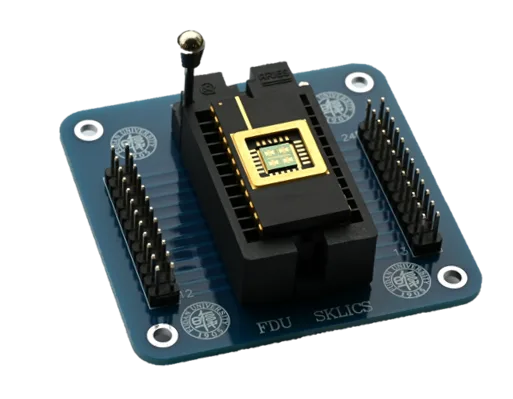
The timing is significant. Across Asia, multiple research teams are racing to commercialize 2D electronics. Fudan University in Shanghai recently achieved the world’s first full-featured 2D flash chip, demonstrating that system-level integration is possible. Chinese researchers have developed the world’s first 2D industrial chip with extreme radiation tolerance.
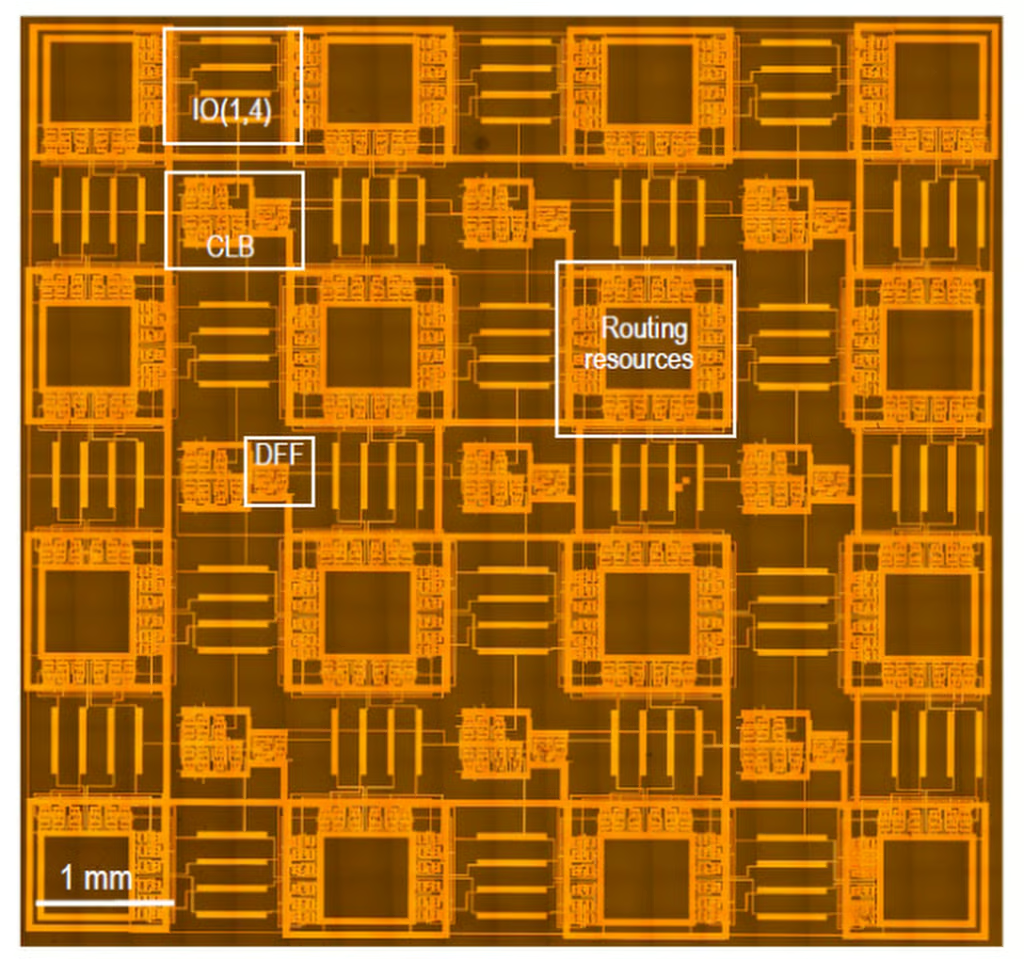
But all these advances depend on solving the fundamental physics problems that UNIST has now addressed. The contact resistance challenge was the gating factor preventing the transition from laboratory demonstrations to real manufacturing.
What Comes Next for 2D semiconductors ?
The research opens concrete pathways for device designers. With accurate predictions of Schottky barrier heights, engineers can now:
- Select optimal material combinations for specific applications
- Design device architectures with predictable performance
- Accelerate development cycles from years to months
- Move toward commercialization with engineering confidence
Professor Jeong stated that the findings
“Fundamentally clarify the mechanisms behind energy barrier formation at the interfaces of 2D semiconductors and semi-metals, which traditional theories failed to explain.”
This is the kind of foundational breakthrough that enables entire industries.
This research represents a critical inflection point. The theoretical framework is now solid. Multiple teams worldwide have demonstrated working 2D devices. Manufacturing processes are improving.
The question is no longer whether 2D semiconductors will work. It’s when they’ll arrive in your devices. Based on the pace of recent breakthroughs, that timeline is accelerating faster than anyone predicted just two years ago.
The age of 2D electronics is no longer theoretical. It’s engineering.
Join the Conversation
The semiconductor revolution is accelerating. If you’re tracking breakthroughs in 2D materials, chip design, and next-generation computing, join WireUnwired Research on WhatsApp or connect with us on LinkedIn for daily insights on the technologies reshaping the industry.
Discover more from WireUnwired Research
Subscribe to get the latest posts sent to your email.