

⚡
WireUnwired Research – Key Insights
- India’s ban on importing popular Chinese drones like DJI clashes directly with a job market that still demands hands-on experience with those exact platforms.
- High prices and weak quality of many “Made in India” drones, coupled with poor after-sales support, are eroding trust in the local hardware ecosystem.
- Developers describe DGCA rules as hostile to hobbyists, stifling experimentation and grassroots innovation that typically seed a strong drone industry.
- Policy incentives have reportedly encouraged relabeling imported Chinese hardware as domestic products, instead of building genuine IP and manufacturing depth.
- Underlying it all is a governance paradox: ambitious visions of becoming a global drone hub undermined by fragmented implementation and everyday corruption risks.
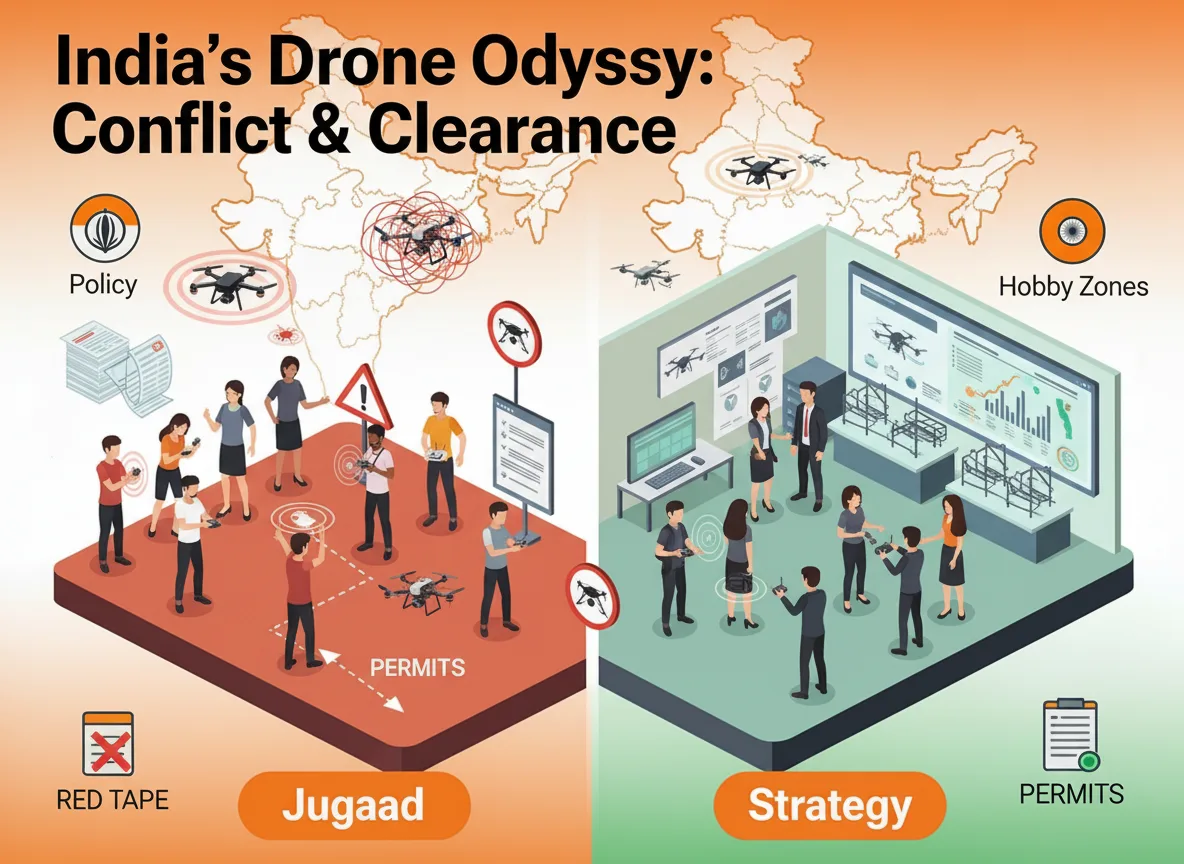
India wants to be a global drone powerhouse, but on-the-ground experience for pilots and builders shows a widening gap between policy ambition and practical reality.
The biggest friction points are an import ban that clashes with market demand, a shallow local hardware base, rules that choke hobbyists, and an enforcement culture that can make every flight feel risky.
Policy vs. Practice: The DJI Paradox
India restricts imports of Chinese drones under its Feb 2022 policy, including leading brand DJI, to push the ecosystem toward domestic products, yet most commercial gigs in mapping, inspection, and content still expect familiarity with DJI platforms.
Because supply is tight, compliant DJI-class drones often cost well above ₹50,000, making entry prohibitive for new pilots who were supposed to benefit from cheaper local options or modular builds.
- Spend months and limited savings building a custom rig from generic parts.
- Or pay a premium for a legally flyable, but import-constrained, branded drone.
In practice, many pilots choose the second path, undermining the original promise that local manufacturing and components would create a more accessible entry ramp.
The Local Hardware Problem
Import restrictions and PLI support were meant to catalyse deep domestic manufacturing, but many Indian drone firms still depend heavily on imported key components such as cameras, flight controllers, and batteries.
Our Analysts warn that weak auditing of incentives can reward shallow assembly or even rebranded foreign hardware, slowing the development of genuine Indian IP and robust platforms.
- Outside a few established defence and enterprise vendors, many local drones are perceived as fragile or under-engineered.
- After-sales support is patchy, so a crash or hardware fault often turns into a total write-off.
- Despite nationalist rhetoric, several agencies and operators still turn to foreign drones for critical tasks when reliability matters most.
The Missing Hobbyist Layer
Under the Drone Rules 2021, almost all but the tiniest drones must be registered, flown within strict altitude and zone limits, and often require permissions through the Digital Sky platform.
Hobbyists say the mix of online paperwork, unclear enforcement, and fear of penalties makes casual experimentation feel unsafe, thinning out the tinkerer and FPV communities that usually seed a country’s professional talent.
When even open-field weekend flying feels like a legal risk, many potential pilots and embedded engineers simply never start.
Registration, Red Tape, and Street-Level Corruption
Digital Sky requires registration and a Unique Identification Number for most drones, with “No Permission, No Takeoff” logic in controlled airspace meant to automate compliance.
To know more on drone photography compliances you can visit ThinkRobotics
Reports from operators describe phases where certain foreign models became hard or impossible to register, leaving owners stuck with expensive hardware that technically exists but cannot easily be flown without worrying about confiscation or fines.
In a system already battling petty corruption, that ambiguity can turn drones into another touchpoint for on-the-spot negotiations.
Safety, Surveillance, and the Social Argument
There is also unease about how cheap drones could be misused for voyeurism, harassment, and unsafe stunts in crowded spaces, especially in dense Indian cities.
This creates a real policy dilemma: unlock innovation in agriculture, infrastructure, and media while preventing nuisance flights and privacy violations in public places.
With uneven enforcement, strict rules risk discouraging conscientious operators more than reckless ones.
From Jugaad to Strategy: What Needs to Change
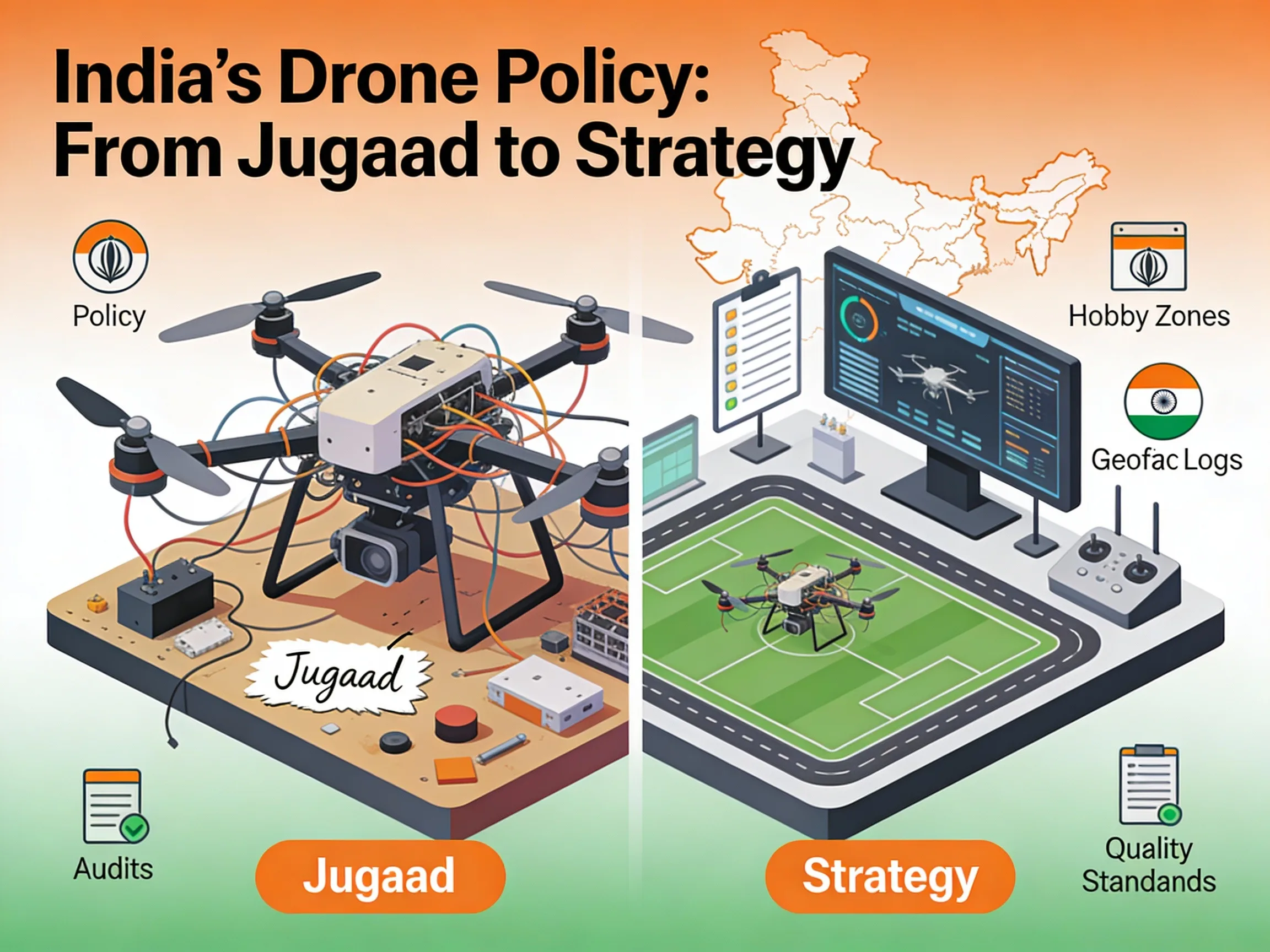
Commentary around the sector points to a familiar Indian pattern: big visions followed by fragmented execution and reliance on jugaad rather than systems.
To shift gears, several moves look increasingly non‑negotiable.
- Align policy with market reality: Either fast‑track competitive domestic platforms or recalibrate import restrictions so pilots are not forced into grey channels.
- Audit incentives deeply: PLI and other schemes should reward genuine localisation and IP, backed by technical audits instead of only paperwork checks.
- Protect legal hobby flying: Define low‑risk categories, zones, and processes that make it easy to tinker and learn without disproportionate penalties.
- Raise quality and service bars: Public and enterprise procurement can mandate reliability, repairability, and support as hard requirements for vendors.
- Modernise enforcement: Use verifiable registration, geofencing in sensitive areas, and digital flight logs to reduce arbitrary decisions in the field.
Community Sentiment: From Cynicism to Conditional Hope
Developers and pilots voice frustration with the current rule set, but investors and policymakers still see drones as a strategic growth sector, with roadmaps targeting a multi‑billion‑dollar domestic market by 2030.
The risk is that a generation of builders and operators burns out navigating red tape before the policy stack settles into something predictable and innovation‑friendly.
If those gaps can be closed, India’s drone dream can still move from slogan to exportable capability; until then, too many of its most motivated pilots may spend more energy on forms and permissions than on flying.
Discover more from WireUnwired Research
Subscribe to get the latest posts sent to your email.